

Our Approach to
Alzheimer'S Disease
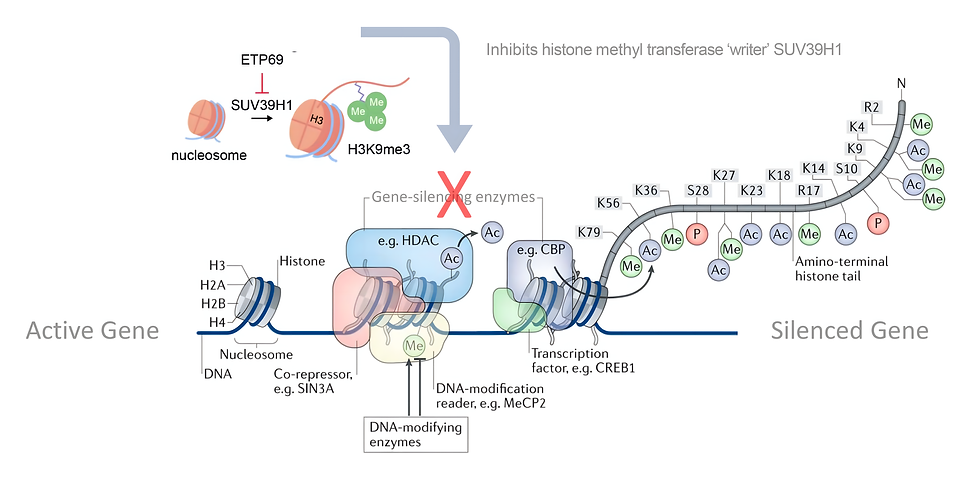
Alzheimer’s disease is closely associated with aging-related changes in gene regulation within the brain, including increased histone methylation. Our research has identified H3K9me3 hypermethylation as a potential molecular driver of cognitive decline, with levels in human brain tissue correlating with cognitive dysfunction and progression from normal cognition to mild cognitive impairment and Alzheimer’s disease.
Our lead drug candidate is designed to reverse abnormal H3K9me3 methylation and restore the expression of genes involved in learning and memory. In transgenic models of Alzheimer’s disease, treatment has demonstrated reversal of cognitive impairment across multiple behavioral tests, including the Barnes and X- and Y-maze tests. Treatment has also been associated with regeneration of dendritic spines, reduction of amyloid plaques and tau pathology, and decreased neuroinflammation.
An Investigational New Drug (IND) application has been submitted to the FDA for our lead drug candidate. Upon regulatory clearance, this would enable us to advance the program into first-in-human clinical studies.
Technology Overview
Targeting gene regulation in cognitive decline
Clinical Development Plan
Advancing Fortem’s lead program toward clinical evaluation
Fortem Neurosciences is moving its lead program through the critical stages of pre-clinical development and FDA review in preparation for clinical studies. With an initial focus on Alzheimer’s disease and mild cognitive impairment, the development plan highlights the company’s current progress, clinical direction, and pathway toward meaningful therapeutic advancement.

